
InterPore News featuring featuring the InterPore2025 survey

Sent on: 10-12-2025

Dear InterPore colleagues,

I came back from InterPore2025 a happy man. Re-energized, inspired, and having made new or reconnecting with old science friends. The survey results show I wasn’t the only one! And so, let's start looking ahead to Nantes for InterPore2026.

Of course, it is still a long way away. Plenty to do in between, like reading more science from our colleagues, visiting the UK chapter meeting or your own local meeting. Interact with the Kimberly-Clark Lecturer (see the report), join in some InterPore courses, etc.

All the best,

Matthijs de Winter
Editor-in-Chief
InterPore News


We can already announce the InterPore 2026 lineup of plenary speakers. In due time, all full bio’s and abstracts will be published.

  • Paolo Colombo, University of Padua (Italy) – renowned in porous media modeling and applications

  • Sophia Haussener, École Polytechnique Fédérale de Lausanne (Switzerland) – expert in energy storage and sustainable systems

  • Katharine Maher, Stanford University (USA) – leading voice in innovation policy and digital infrastructure

  • Philip Withers, University of Manchester (UK) – world-class authority on advanced imaging of porous materials


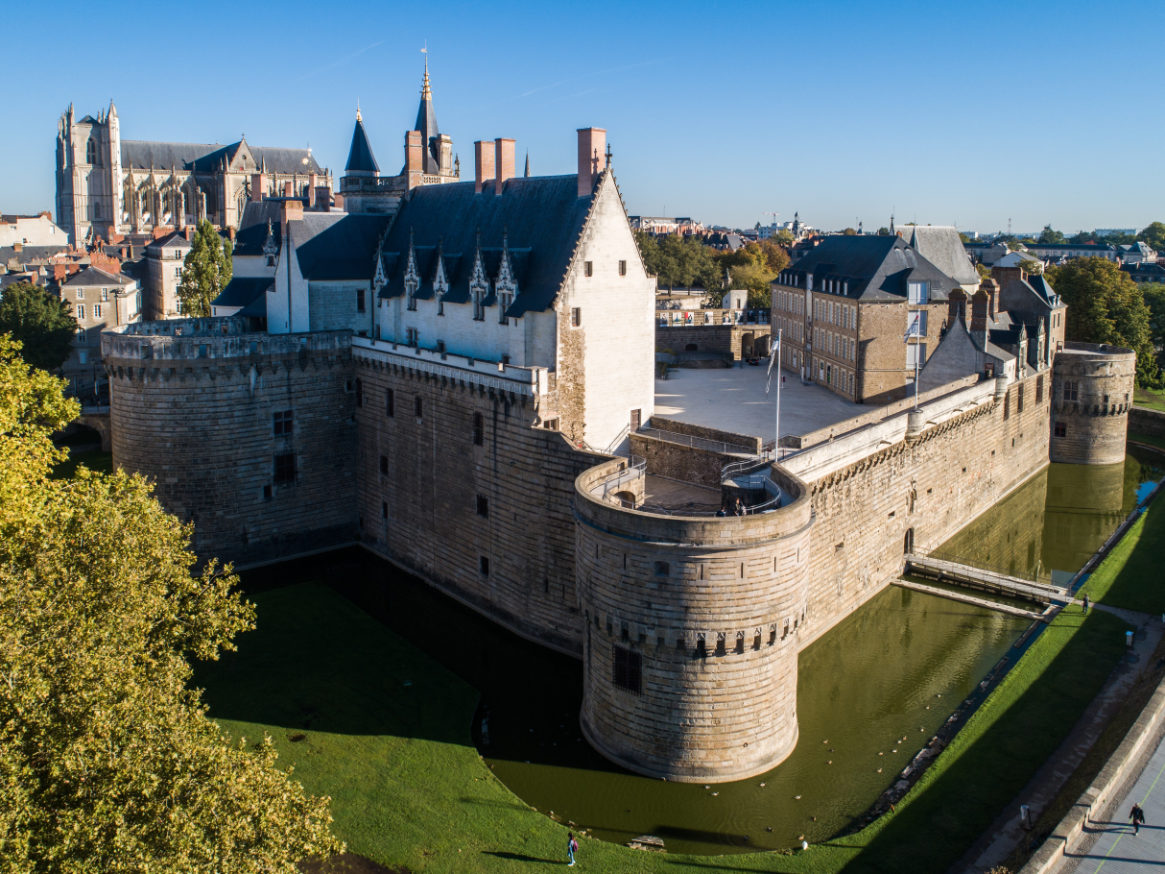
InterPore2026 will be in Nantes. This week's cultural highlight: Château des Ducs de Bretagne

One of the city's must-see landmarks is the Château des Ducs de Bretagne (Castle of the Dukes of Brittany). Located in the historic heart of Nantes, this impressive fortress was primarily built in the 15th century, with architectural elements spanning from the 14th to the 18th centuries. Originally a ducal residence, the castle became a royal fortress in 1532 when the Duchy of Brittany was incorporated into the French crown, and later served as a state fortress after the Revolution.

Best of all, it’s just an 11-minute walk from the conference venue!

Photo credits and copyright: Valéry Joncheray


Thank you for your positive feedback! We noticed a great mix of first-time attendees and long-time InterPore supporters. The scientific program was rated “High” or “Very High” by 90% of the respondents. Also the social events organized by the LOC were highly appreciated. The main room for improvement comes from the online participants, which will be carefully evaluated before InterPore2026.

The full report can be found on our website:


The InterPore DEI Committe is looking for new members - we aim to comprise a group that represents the breadth of InterPore membership, including geographic and career level diversity. We are particularly in need of committee members who can speak to the perspectives of InterPore members from Africa and South America, and folks who are in more senior career positions (post-tenure or equivalent). Please apply with a letter of intent to DEI@InterPore.org by 31 July 2025.


Interested in promoting your organization’s latest and greatest research? Consider submitting a Research Spotlight to InterPore. This series is based on short scientific texts with illustrations that give an idea on current projects or group contributions in various fields of porous media research. This opportunity is open to all Institutional Members of InterPore.

If you would like to contribute a Research Spotlight, please contact margaret.dieter@interpore.org.


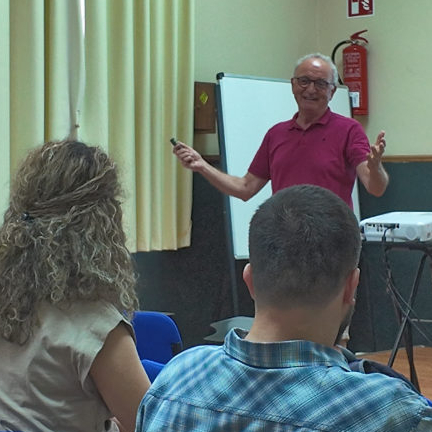
Prof. Rainer Helmig, from the University of Stuttgart, Germany, is the Kimberly-Clark Distinguished Lecturer of 2025. So far this year, he has presented 13 lectures at universities and institutions all over the world. The most recent one took place on 9 June at the SMILE Summer School (Marie Sklodowska-Curie Actions - Doctoral Network) in Palma de Mallorca, Spain.

Prof. Helmig will be in the presenting his lectures in various locations in the UK in September and in the USA this autumn.


1-2 September 2025, Loughborough University, Loughborough, UK

The 8th InterPore UK Chapter Conference will take place on 1–2 September 2025 at Loughborough University, UK! This vibrant, interdisciplinary event will bring together researchers, industry professionals, and stakeholders to explore the latest advances in porous media science and engineering.

View the website for more details.

Abstract submission deadline: 25 July 2025


PORE 3-2: Fundamentals of Geothermal Reservoir Engineering

Join us starting on July 9th for our next Academy course "PORE 3-2: Fundamentals of Geothermal Reservoir Engineering" taught by Rita Esuru Okoroafor, Assistant Professor at Texas A&M University.

The course will consist of four lectures hosted on Wednesdays and Thursdays from 8:00-11:00 am Central Daylight Time: July 9th, 10th, 16th, & 17th.


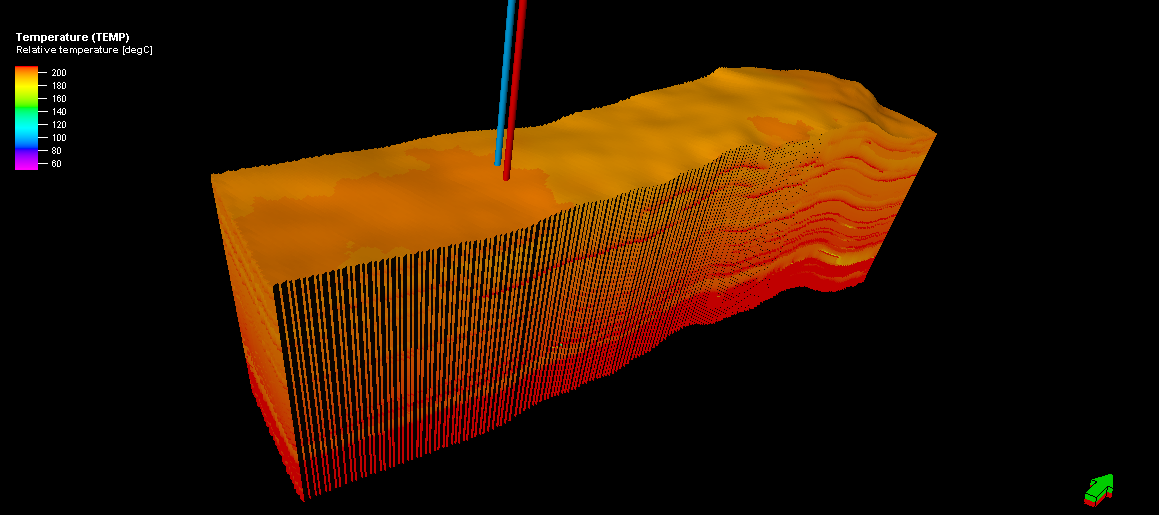
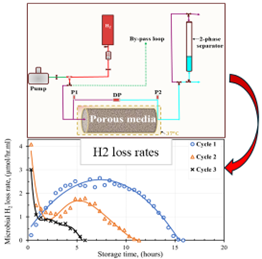
Raymond Mushabe, Na Liu, Nicole Dopffel, Geir Ersland, Martin A. Fernø

We used a well-studied sulphate reducer, Oleidesulfovibrio alaskensis G2 0as a model bacterium strain A.

Repeated drainage and storage scenarios were developed, and microbial hydrogen consumption rates were determined depicting a worst-case scenario in a nutrient rich reservoir environment. Our experimental data contributes to the understanding of microbial hydrogen loss risk during UHS and how it can affect recovery and storage efficiency.

InJournals, 18 Jun 2025


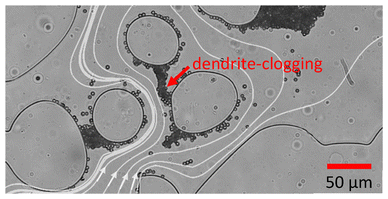
Walid Okaybi, Sophie Roman, Cyprien Soulaine

Fluids flowing through porous media can become blocked by suspended particles. This study reveals a new clogging mechanism where particles form dendritic (branched) structures that grow between grains, obstructing pores and drastically reducing permeability. Using microfluidic experiments and simulations, researchers identified a physical criterion balancing adhesion and flow-induced detachment forces. At moderate flow speeds, dendrites form easily and clog pores; at higher speeds, flow prevents their growth. These findings have broad implications for filtration, groundwater flow, and biomedical microfluidics by helping mitigate clogging in porous systems.

Soft Matter, 2025


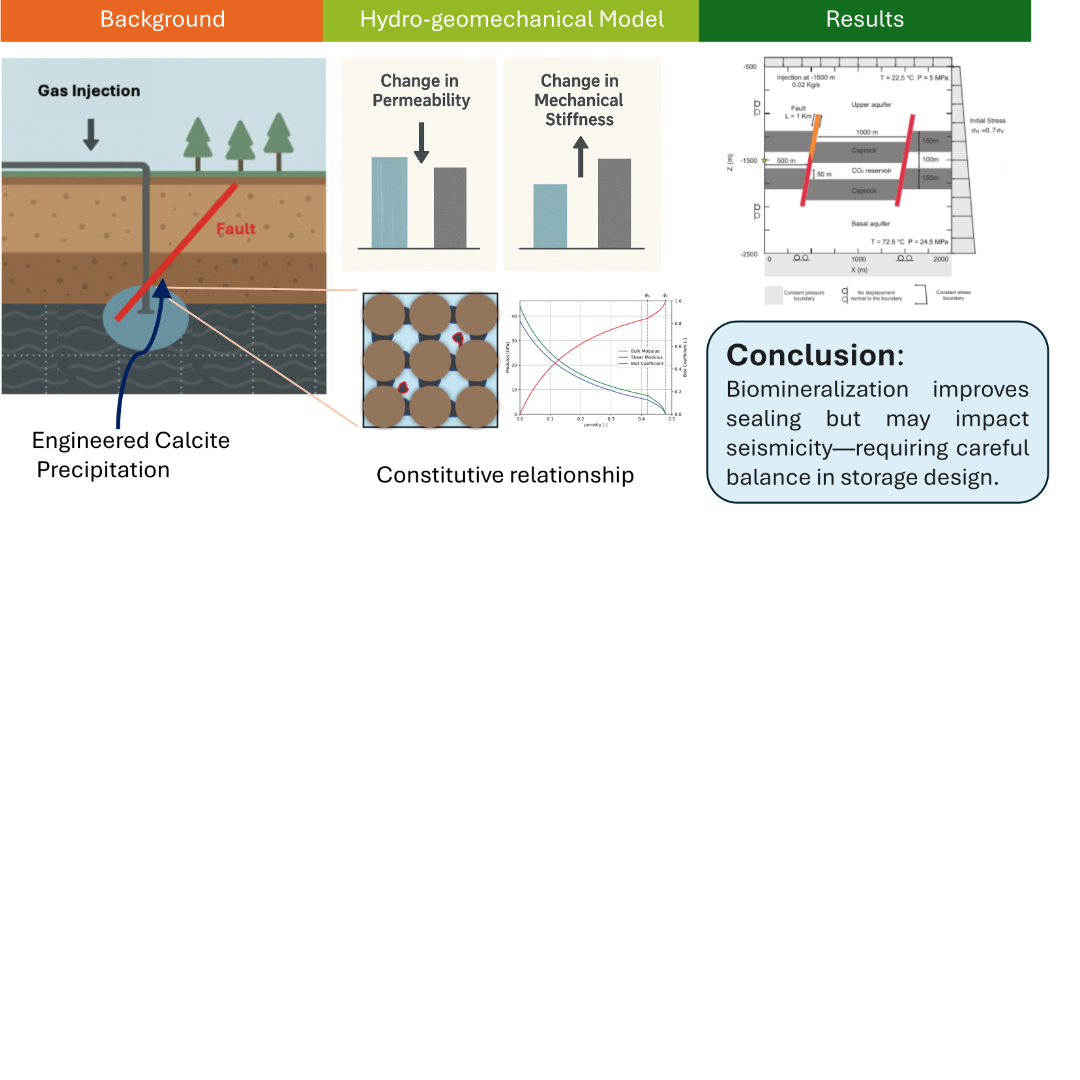
Yue Wang, Holger Class

We present a novel hydro-geomechanical model that allows for systematic assessment of how biomineralization processes like EICP/MICP influence the sealing of faults in underground gas storage, while carefully balancing permeability and geo-mechanical response, laying the groundwork for more informed application of MICP in underground storage applications.

InterPore Journal


Misagh Esmaeilpour, Cheng Chen, Saeid Sadeghnejad, Behzad Ghanbarian

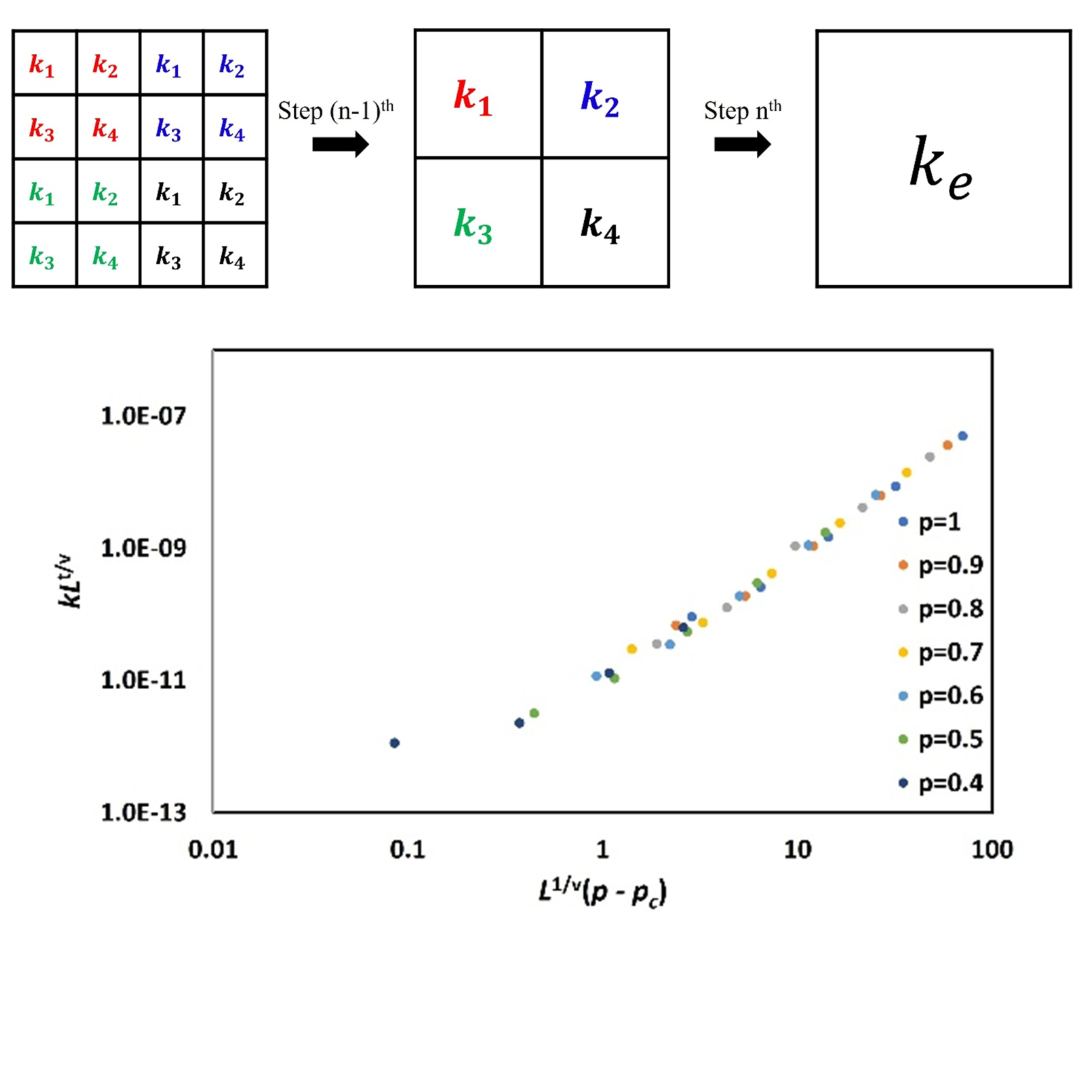
Understanding the scale dependence of permeability in geologic formations is essential for accurate modeling of subsurface flow, particularly for underground energy storage. This study investigated the scale-dependent permeability of random and heterogeneous formations using renormalization group theory (RGT) and finite-size scaling analysis. Ten formations with varying heterogeneity were generated at five dyadic domain sizes. Effective permeability was computed at different occupation probabilities. While permeability plots were scattered, finite-size scaling successfully collapsed the data onto a single quasi-universal curve, demonstrating its ability to account for large-scale heterogeneities in the scale dependence of permeability.

Advances in Water Resources
Volume 203, September 2025, 105019


Job Offers

PositionLink
A Junior Professorship position (with a consolidation as a Full Professor within 5 years), University of Bordeaux, France Show Job Offer

There is always something going on at InterPore! We have courses, workshops, and webinars through the InterPore Academy, Chapter Meetings across the globe, and the Annual Meeting in a new and different location every year. Check out the offerings through the button below.