
InterPore2027 Bulletin (1)

Sent on: 06-11-2026
statue with view of landscape

Submit your abstract today!

Abstract submission is now open for InterPore2027. Share your latest research, connect with the international porous media community, and contribute to a diverse scientific program spanning a wide range of disciplines and applications.


Submit your proposal for our 2027 Conference Course Program! Courses will be organized as satellite events of the InterPore Annual Meeting in Rio de Janeiro on the following dates:

  • Sunday, 9 May 2027
  • Friday, 14 May 2027

Standard duration of a given course will be half a day (3-hour lecture). Proposals for non-standard duration, if well justified, will be considered. Main criteria for selection of proposals include track record of the proposers as well as the opportunity to ensure diversity to a full extent across all courses.

To submit your proposal, please complete the submission form.


Planning to present your research at InterPore2027 in Rio de Janeiro but facing financial barriers to attending? Conference grants are available to help support participation.

The InterPore Foundation offers grants to graduate students from any country and researchers from academic institutions in low- or middle-income economies, as defined by the World Bank.

Two types of support are available:

  • Registration Fee Waiver: Covers the conference registration fee.
  • Full Conference Grant: Covers the registration fee plus up to €500 toward travel costs.

Applicants must be presenting at InterPore2027 and hold a valid InterPore membership. Student applicants must also submit a Letter of Support.

Application deadline: 15 January 2027 at 23:59 PST.

We encourage eligible applicants to submit their applications and ask our members to share this opportunity with colleagues who may benefit from financial support.


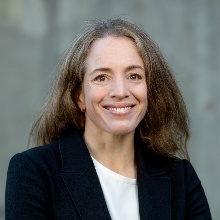
We are pleased to welcome Inga Berre of the University of Bergen, Norway, as an invited speaker at InterPore2027.

In her lecture, “The Role of Coupled THMC Processes in Fractured Porous Media for Deep Geothermal Energy Production,” Berre will explore how the interactions between thermal, hydraulic, mechanical, and chemical processes influence the behavior of fractured geothermal reservoirs.

Her presentation will highlight advanced mathematical modeling approaches for understanding how fluid injection and production can affect fracture deformation, fault reactivation, mineral precipitation and dissolution, and phase changes. These insights are important for improving our understanding of deep geothermal systems and their role in sustainable energy production.


Minisymposia Spotlights

From machine learning and biomedical engineering to the physics of multiphase flow, the InterPore2027 minisymposia reflect the interdisciplinary breadth of porous media research. This week, we highlight four sessions inviting contributions from across the scientific community.

Understanding how multiple fluids move through porous materials is essential for applications ranging from CO₂ storage and groundwater remediation to membranes and fuel cells.MS05 explores the physics governing multiphase flow across scales, with particular emphasis on connecting pore-scale processes to larger-scale behavior through experiments, modeling, and theory.

How is machine learning transforming porous media research? MS15 explores advances in physics-informed machine learning, deep learning, surrogate models, and data-driven approaches. Contributions are welcome on applications ranging from pore-scale imaging and digital rock physics to multiscale modeling, subsurface flow, and material design.

This special session honors Professor Jaime Gomez-Hernandez and his contributions to understanding complex subsurface systems. MS20 welcomes research on geostatistics, stochastic and inverse modeling, uncertainty quantification, data assimilation, and multiscale characterization of heterogeneous porous media.

What do lungs, kidneys, bones, and tumors have in common? They all involve complex biological structures in which transport and mechanics are closely linked. MS25 focuses on living porous systems whose structures continuously deform, grow, and adapt. The session welcomes theoretical, computational, and experimental research connecting porous media science with physiology, biomechanics, and biomedical engineering.

Have research to share? 

Explore these and the other InterPore2027 minisymposia and submit your abstract by 11 January 2027.


We are pleased to welcome Reactiv'IP as a Silver Sponsor and Exhibitor at InterPore2027! We sincerely appreciate their support and look forward to their participation in Rio!

Interested in sponsoring or exhibiting at InterPore2027? Our Sponsor & Exhibitor Prospectus outlines opportunities to showcase your products and services, increase your visibility, and connect with the international porous media community.