
InterPore News featuring: Awardees, Science, Courses, and more

Sent on: 11-12-2025

InterPore is aware that many of our members may be affected by the ongoing war between Israel and Iran. InterPore members from both countries have made significant contributions to our society, and each hosts an active InterPore chapter. Our thoughts are with all those impacted, our InterPore members in both countries and those with friends or family in the region. We recognize the shared values of science, dialogue, and collaboration that unite us, and we hope for a peaceful resolution with minimal harm to civilians, especially our valued InterPore members and their loved ones.

InterPore Executive Committee 


Dear InterPore colleagues,

This week, I had the pleasure of joining an international meeting in a 15th century cloister (fully equipped with modern facilities!) and a symposium in a characteristic villa from the late 1930s. Nice venues contribute to a good conversation when the impression of the venue is mutual. It also helps the collective memory (I will remember the chapel room in Albuquerque!).

Nevertheless, the best meetings are a result of the people in them, like in Albuquerque (reminder for the survey!). With that, there are good prospects for future events, too, such as the UK chapter meeting, the InterPore Academy course, the Kimberly-Clark Lecturer, also demonstrated by international collaborations resulting in great scientific papers (see Awardees and InJournals section).

All the best,

Matthijs de Winter
Editor-in-Chief
InterPore News


Your input is essential for the continual improvement of our conferences. Please help us by completing this brief survey. 

We value your opinion and look forward to your feedback!


We are pleased to announce the call for bids to host InterPore2028, which will take place in Europe on either 9-12 May or 16-19 May 2028. We invite institutions and organizations interested in serving as the local host to submit their proposals to help shape another successful and engaging conference.


Planning is already underway for InterPore2026 in Nantes! Mark your calendars and stay tuned for information on next year’s event.


Prof. Lyesse Laloui, from the Swiss Federal Institute of Technology at Lausanne (EPFL), Lausanne, Switzerland, is the Kimberly-Clark Distinguished Lecturer of 2026. As the winner of this year’s distinguished award, Prof. Lyesse Laloui will be giving one of his two lectures at selected institutions. Hosts may select one of two options:

  • Lecture 1: Tailoring Soil Properties through Bio-Geo-Chemical Engineering
  • Lecture 2: Carbon Dioxide Injection into Deep Aquifers: a Geomechanical Perspective

For detailed information about the lectures, please visit Prof. Laloui’s page.

If your university/institution is interested in hosting Prof. Laloui, please fill out the application form on our website by 31 December 2025.


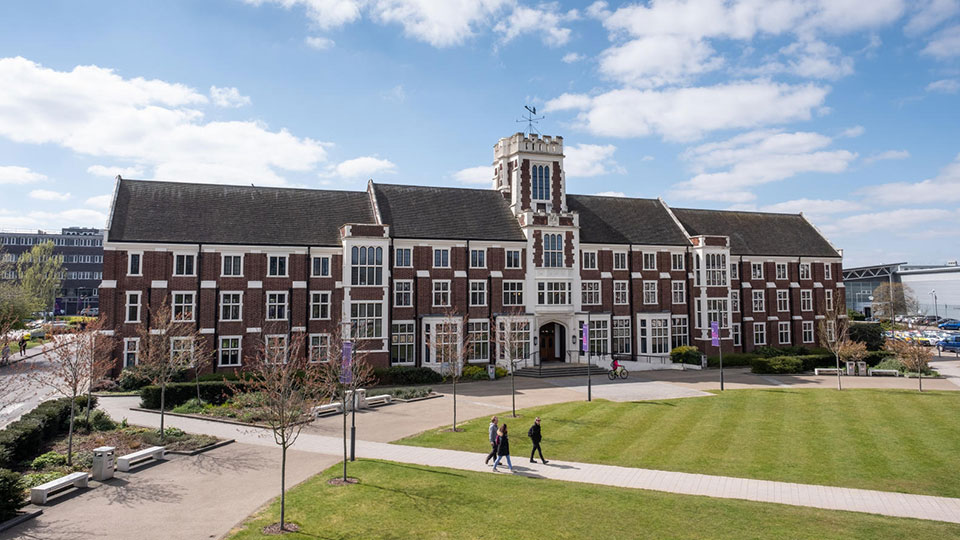
1-2 September 2025, Loughborough University, Loughborough, UK

We are pleased to invite you to submit abstracts for the 8th InterPore UK Chapter Conference. The conference offers a dynamic platform for interdisciplinary collaboration and knowledge exchange, addressing global challenges through porous media research and applications.

Abstract submission deadline: 25 July 2025
Submit your abstract here.

Check out the flyer for more information.


InterPore is proud to announce the first recipients of the InterPore Journal Invited Student Paper Award from InterPore Journal: Tatiana Danelon, Philip J. Salter and Jingqi Lin. Congratulations!

This new award celebrates exceptional student presentations at the InterPore Annual Meeting that lead to high-quality, peer-reviewed publications.


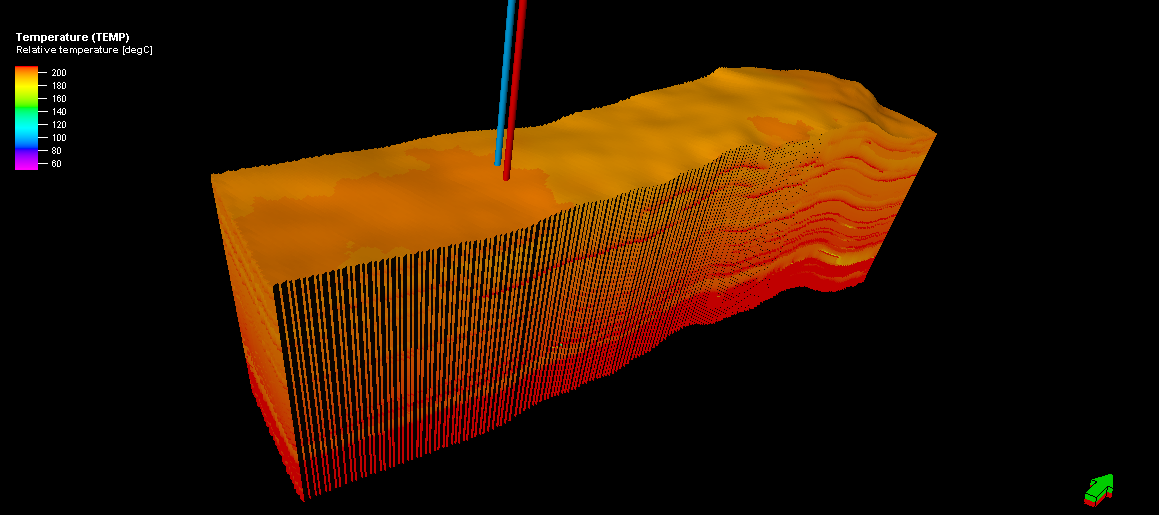
PORE 3-2: Fundamentals of Geothermal Reservoir Engineering

Join us next month for the following new topical course, "PORE 3-2: Fundamentals of Geothermal Reservoir Engineering" which will be lectured by Rita Esuru Okoroafor, an Assistant Professor at Texas A&M University.

This course will take place on July 9th, 10th, 16th, & 17th, from 8:00-11:00 am Central Daylight Time


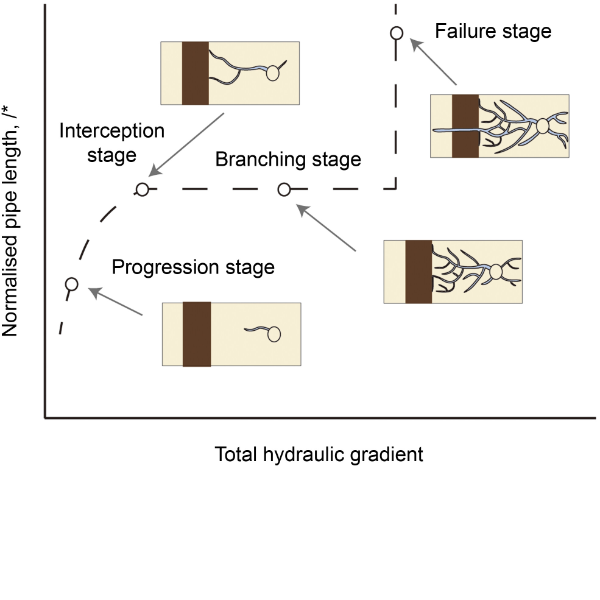
Potential of low-permeability barriers to mitigate backward erosion piping

Lexin Li, Vera van Beek, Timo Heimovaara and Anne-Catherine Dieudonné

This study proposes the use of nature-inspired low-permeability barriers to mitigate backward erosion piping (BEP) in dykes. Laboratory experiments demonstrate the effectiveness of low-permeability barriers formed by mixing sand with aluminium–organic matter flocs or clay. These barriers significantly inhibit pipe progression, increasing the required hydraulic gradients by 2.2 to 7.4 times compared to sand alone. Key mechanisms include flow energy dissipation, pore clogging, and prevention of sand fluidisation. The results highlight the influence of barrier properties—such as permeability, depth, and heterogeneity—and offer practical guidance for design and future numerical modelling of BEP mitigation strategies.


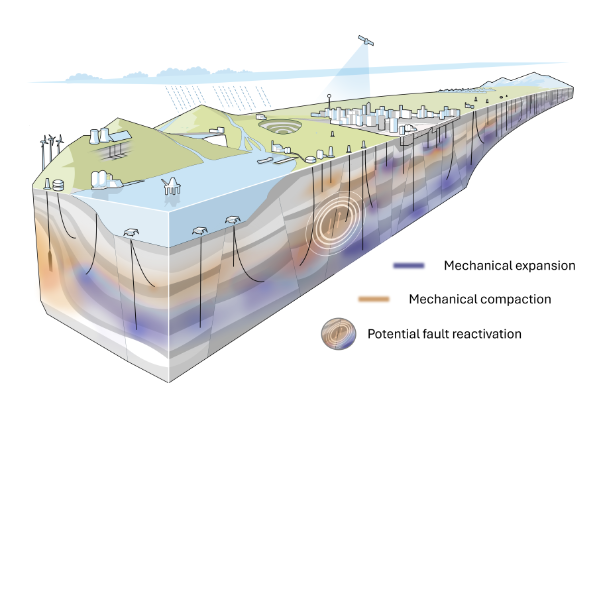
Inga Berre, Paola F. Antonietti, Rainer Helmig, Marc Hesse, Jan Martin Nordbotten

The subsurface is a critical foundation for society, providing essential resources such as water, minerals, and energy, while also offering storage capacity for resources and waste.  Current subsurface use is expanding rapidly, leading to aggregated effects at regional scales ranging from tens to hundreds of kilometers. Despite their growing importance, current subsurface models remain limited to field-scale analysis and are insufficient for understanding regional scale impacts. This commentary advocates for a shift in subsurface modeling research, highlighting the importance of developing regional scale models that can assess the cumulative and interconnected effects of multiple subsurface operations.


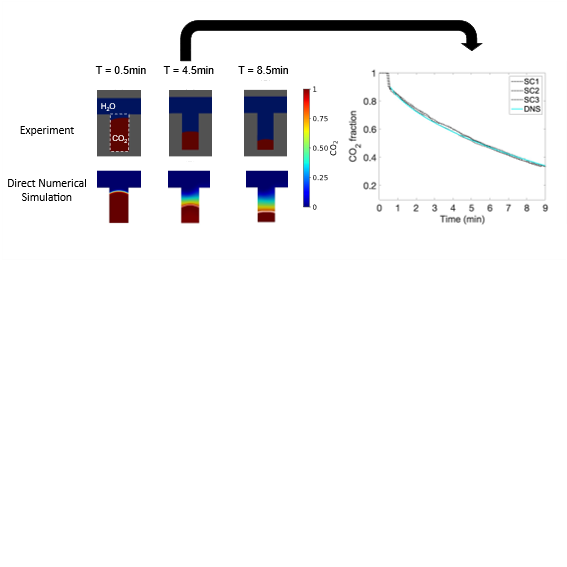
Alexandros Patsoukis Dimou, Mahdi Mansouri Boroujeni, Sophie Roman, Hannah Menke, Julien Maes

How do CO₂ bubbles dissolve in the tiny pores of underground rocks during carbon storage? Our latest study combines experiments in 3D-printed micromodels and direct numerical simulations to investigate this key pore-scale process. We present a reproducible experimental dataset and show how numerical models can capture interfacial mass transfer in the pore space. A step forward for validating pore-scale CO₂ dissolution models in CCS.


There is always something going on at InterPore! We have courses, workshops, and webinars through the InterPore Academy, Chapter Meetings across the globe, and the Annual Meeting in a new and different location every year. Check out the offerings through the button below.